Buyer guide · Choosing a sourcing partner
Why many overseas buyers work with a sourcing partner
Most buyers try both sides of the market sooner or later — a factory directly, then a sourcing partner, or the other way round. The decision is rarely about who can quote the lowest figure. It is about a short list of things a buyer needs to happen around the order, and most of those things are about coordination rather than manufacturing. Here is what that list looks like from your side of the table.
- 2014buying in Yiwu, China since
- 10+years in Yiwu, China
- 7offices worldwide
- 09285183Neshat Trade Ltd, company no.
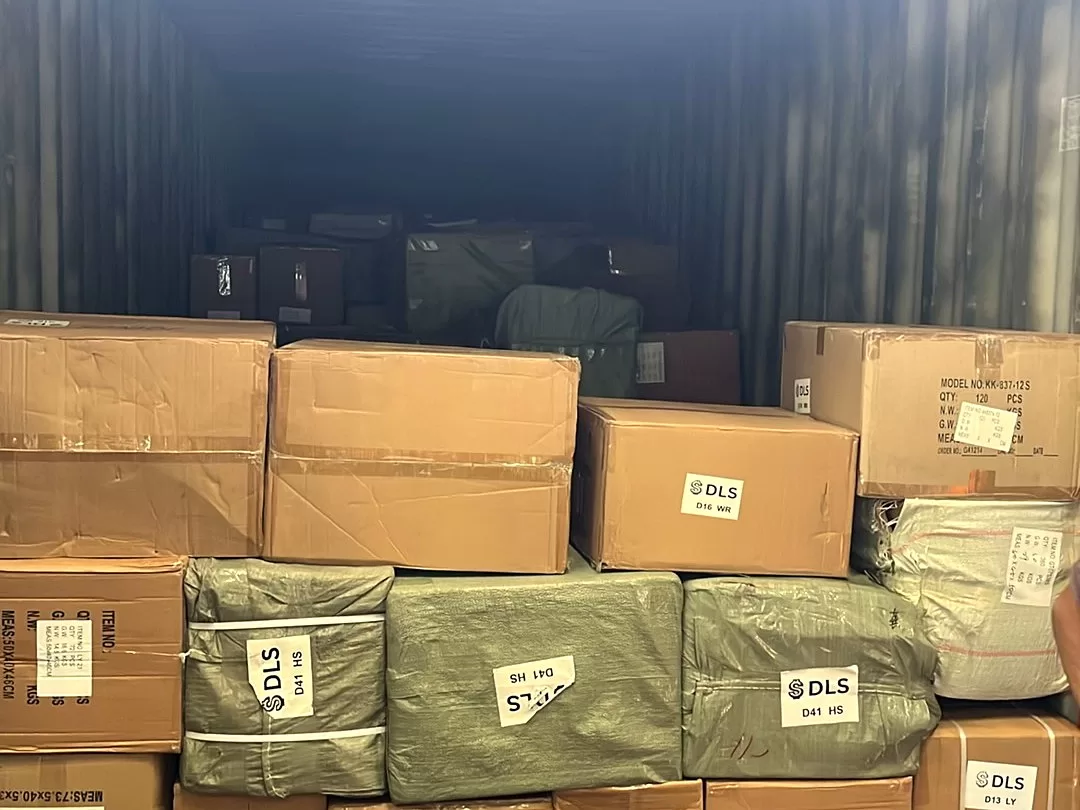

Our own warehouse in Yiwu: where several suppliers, one order and one deadline are brought together in the same place.
Why buyers keep trying both sides
The choice is rarely made on price alone
A factory sells a product it makes. A sourcing partner coordinates the making, the paperwork, the movement and the follow-up. These are less two competing offers than two halves of one job, and a buyer often starts with one and adds the other. What tips the balance is how much of that job the buyer wants to keep in-house.
On a single product, from a single supplier, into a single market, dealing with the maker directly can be the simplest route — and plenty of buyers are right to take it. As an order widens — more products, more suppliers, more destinations, more rules — the coordination around the goods grows until it is a second job in its own right, and many buyers choose to hand that job to one partner whose role it is. Neither arrangement is better in the abstract. It is a question of where the buyer’s time is best spent, and that answer changes from one order to the next.

What buyers weigh
Six things buyers are really measuring
Whatever the category or the market, buyers describe the same handful of needs when they explain why an order went well or badly. They are worth knowing before you compare anyone on price, because a low figure that fails on any of them is not a low figure for long.
Replies while a decision is live
A first answer within a working day is worth more than a perfect one next week. Most buyers are weighing two or three options at once, and the one still replying when the decision is made is the one still in the running.
The specification, plainly stated
What the material is, how it is made, how it is packed and when it ships, written so the buyer can hand it to their own customer without translating it. A firm answer beats a vague one every time.
A sample before a firm price
A sample turns a description into something both sides can point at. Buyers read a supplier who samples first as one who means to quote something that can genuinely be made to that standard.
One contact for the whole order
When an order runs across several factories, a single contact who holds prices, quantities, packing and deadlines spares the buyer from reconciling a dozen separate threads.
Documents that do not stall the goods
Export paperwork, labelling rules and import requirements differ from market to market. Documents that are right the first time keep a container moving; ones that are not can hold it at the port.
Someone who owns the problem
Goods sometimes arrive wrong. Buyers remember less the fault than the handling: one person who takes it over and sees it through, rather than a message passed back to the buyer to chase.
Two of the six, in more depth
Why a sample usually comes before a firm price
A quotation is a promise about goods the buyer cannot see yet. A sample is the only way to make that promise concrete, so the suppliers buyers trust most tend to sample first and price second — and to say plainly when a requested feature will not work, rather than quote around the difficulty. That is not slowness; it is the shortest route to a price that will still hold when the goods are made. When something cannot be confirmed from the sample, the honest answer is that it will be settled on the quotation, and then settled in writing.
The same holds for the material and the lead time. A buyer who is told “we will confirm the exact grade and the delivery window on the quotation” learns more than one handed a confident number that quietly changes later. How we research and select suppliers →
One name, not a dozen
What buyers mean by a single point of contact
An order that touches eight suppliers can arrive as eight different conversations, eight sets of documents and eight timelines. A single point of contact does not remove that complexity; it absorbs it. One person holds the whole order, knows which factory is behind, flags it before it becomes a missed sailing, and answers the buyer in one voice. For the buyer, the value is not that fewer people are involved — it is that no problem has to be discovered twice.
This is also where accountability lives. When goods, paperwork or timing go wrong, what a buyer wants is not an apology but a decision: who is fixing it, and by when. A partner who owns the order from the first enquiry to the final document can give that answer directly, because the same party is answerable throughout. How we follow an order through →
The part buyers never see
Documents, compliance and the details that decide your landed cost
A price is only useful once the goods can actually be imported. Between the factory gate and the buyer’s warehouse sit export documents, labelling and market-entry requirements, customs procedures and the charges that come with them — and every market sets its own. A buyer who has never shipped from a particular country will not necessarily know which box a certificate goes in or which label a shelf demands. Getting those details right is unglamorous and largely invisible, and it is exactly where an order is most often delayed. We treat the requirements of each destination as quotation-specific and put the working in front of the buyer rather than assuming it. What we check before shipping →
Before you choose anyone
A short checklist for any supplier or partner
- How quickly, and how reliably, do they reply?
- Can they state material, process, packing and timing plainly?
- Will they sample before they put a firm price on paper?
- Is there one person who holds the whole order?
- Who prepares the documents, and who checks them?
- When something goes wrong, who owns it to the end?
Six questions, asked of anyone, will tell you more than a page of rates. The answers matter more than the labels on the door.

Common questions
What buyers ask before choosing a partner
Is a sourcing partner only worth it for large orders?
Not necessarily. The question is how much coordination the order needs, not only how big it is. A small order spread across several products and suppliers can need more hands than a large one from a single factory. We will say which of the two your enquiry looks like, rather than assume.
Can I keep buying from my own factories and still use a partner?
Yes. If you already deal directly with suppliers, we can quote against your existing specification, or handle inspection, consolidation and export documents while you keep sourcing where you do. The same six questions still apply, because they are about the order rather than about who makes it.
What if I am not sure the order needs anyone in the middle?
Then it may not. On a simple, single-supplier order you may be better served by dealing with the maker directly, and we would rather tell you so than take on work that adds nothing. Send the brief and we will give you a straight view of where the time and risk actually sit. Read common questions →
Related reading
More buyer guides in this series
Companion guides for buyers working through a first order or a new range:
- What a good supplier asks you before quoting
- How to really understand a product before you import it
- What an export partner actually does for a buyer
- What happens after you send an enquiry
- The person behind your order: what to look for in an export contact
See all buyer guides →
Tell us what you are buying next
Send the product, the quantity and your destination. You get supplier options, a landed-cost view and a timeline — free.