
Buyer guide · The person you deal with
The person behind your order: what to look for in an export contact
A supplier is judged on what it makes and how it ships. An order usually stands or falls on something smaller and more human: the one person who answers your emails, holds your specification and speaks up when something moves.
- 2014buying in Yiwu, China since
- 10+years in Yiwu, China
- 7offices worldwide
- 09285183Neshat Trade Ltd, company no.
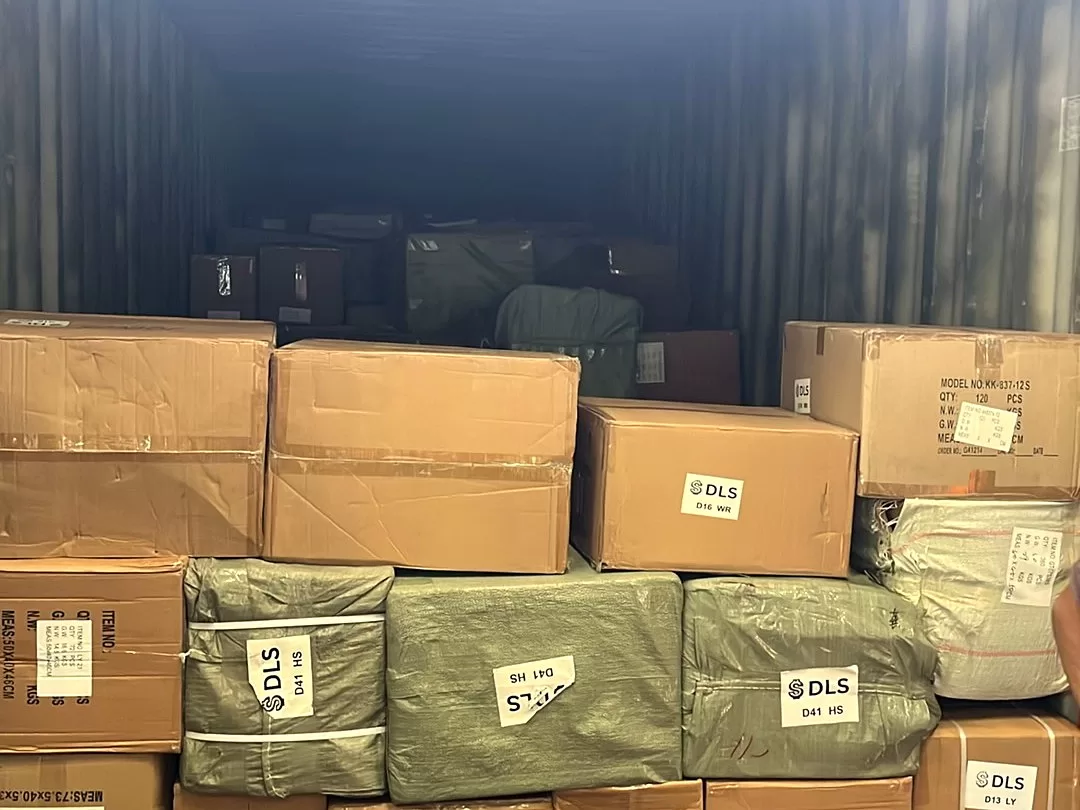

Our own warehouse in Yiwu: where a specification written by one person is turned into a loaded container.
Why the person matters
You are choosing a person, not only a company
Ask a buyer why an order went well and the answer is rarely about an org chart. It is a reply that came the same day, a detail caught before the container was sealed, a message explaining a delay before anyone had to chase it. A catalogue tells you what a supplier sells; the contact behind the order tells you what it will be like to buy from them.
Two suppliers can offer the same product at the same price and feel completely different to work with, because the difference sits with the person you speak to. A capable contact absorbs the distance — the time zone, the language, the chain of hands an order passes through — and gives you one steady point of contact. None of this is charm; it is habit, and habit is visible from the first email. See how we run an order →

What good looks like
Eight things a capable contact does
Each is simply visible, and together they are the difference between an order that runs and one you manage yourself. Read them as a checklist for any supplier’s contact, ours included.
- Asks about the order before quotingA price from one sentence is a guess. A capable contact asks what the product must do, who buys it, the quantity, packing and labelling, destination and timing — then quotes. What a good supplier asks before quoting →
- Replies while your decision is liveA first answer within a working day matters, because most buyers weigh two or three options at once. Just as telling is the rhythm later: the tenth follow-up gets the attention of the first.
- Says what they do not yet knowAn honest “let me confirm that and come back today” beats a confident number that quietly changes. Strong contacts put the uncertain detail on the quotation rather than guess it into the conversation.
- Moves the order forward without being chasedA quotation followed by silence leaves the buyer to drive. A capable contact proposes the next step — a sample, a revised option, a short call.
- Tells you before you have to askSample, production, inspection, packing, sailing: each stage has a moment when news is useful. A good contact messages at those moments rather than going quiet and later explaining a missed date.
- Raises a problem early, with a planThings go wrong even on a good order: a fault on the line, a supplier running late, a document needing a second look. Buyers remember hearing it from their own contact first, with what they propose — not finding it at the port.
- Answers with your market in mindQuestions about your retail price and your season show a contact thinking about your side of the border, not only the factory gate.
- Hands over cleanly, or covers properlyContacts go on leave and people move on. A capable contact keeps the order’s detail — the specification, the terms, the history — where a colleague can pick it up, so a handover is a summary, not a restart.
Worth noticing early
Warning signs in a contact
No single one of these is proof of anything, and an honest contact can have an off week like anyone. But a pattern of several is worth a direct conversation before you commit — because each one tends to grow, not shrink, once the order is running.
Speed that does not last
Replying within the hour while you are choosing, then a much slower rhythm once the order is placed.
Numbers that change quietly
A confident weight, tolerance or date that shifts later with no source and no word that it moved.
A yes to everything
Every request met with agreement and no drawback ever raised. A contact who never flags a risk, a cost or a limit is rarely in control of the details.
Contact only when they want something
You hear from them at quotation and at payment, and nowhere in between. The order is being pushed, not looked after.
No one person to reach
You are passed between names, and each time you re-explain the specification. One contact who holds the thread is basic to an order that stays on course.
Documents and timing as an afterthought
“We will sort that later” applied to labelling, paperwork or a loading date — the details that decide whether goods clear and arrive on time.
The safe move is not to walk away on one odd reply, but to ask the questions directly. How someone answers a fair question about their own process tells you a great deal. Read common questions →
The handover test
What happens when your contact is not there
The clearest test of a well-run order is what happens when your contact is on leave, on a plane or off sick. On a fragile order the whole picture lives in one person’s head; on a well-run one the detail lives with the order, so a colleague can step in without a week of catch-up. It is easy to check before you commit, simply by asking: a capable contact names someone who covers for them. If the answer is vague, that is information too — better learned in week one than the week a container is due to sail. How we follow an order through →
Ask these early
What to settle with your contact
Six short questions you can put to any supplier’s contact in the first week. They cost nothing to answer and tell you more about how the order will run than the price does.
- Who, by name, holds my order?
- How quickly should I expect a reply, and by which channel?
- Who covers for you when you are away?
- How will you tell me if a date or a detail moves?
- Where are the specification and the terms written down?
- When a problem appears, who owns it and how will I hear?
You are asking how the other side works, not for a service level. A straight answer is worth more than a polished one. See our buyer resources →

Common questions
Questions buyers ask about the person they deal with
Is the company not more important than the individual?
The company sets the standard and the terms, and a good company trains the people who carry them out. But you do not work with the company; you work with the person it puts in front of you. When both are strong, the order runs; when the contact is the weak link, the gap lands on your desk.
Can I ask to keep the same contact for the whole order?
Yes, and it is a reasonable thing to ask. Continuity keeps a specification, a set of terms and a running history in one place, rather than spread across people who each know a part. If a supplier cannot promise one named contact, ask how the order is documented so that nothing depends on one person’s memory.
What if my contact changes halfway through?
It happens, and it is not automatically a problem. What matters is the handover: the specification, the terms and the stage the goods are at should move with the order, so the successor starts from a written picture. If a change means you explain your own order again, the detail was never held in one place.
How do I raise a concern without souring the relationship?
Ask about the process rather than the person: how updates are shared, when you should expect to hear, who covers for whom. Most friction comes from not knowing what to expect, not from bad intent. A supplier who welcomes the question is showing you the behaviour you hoped to find.
Related reading
More buyer guides in this series
Companion guides for buyers working through a first order or a new range:
- What a good supplier asks you before quoting
- How to really understand a product before you import it
- Why many overseas buyers work with a sourcing partner
- What an export partner actually does for a buyer
- What happens after you send an enquiry
See all buyer guides →
Tell us what you are buying next
Send the product, the quantity and your destination. You get factory options, a landed-cost view and a timeline — free.