Our team · How we work
The six habits behind every Neshat order
Importers rarely lose money on the price on the invoice. They lose it on a specification that was never written down, a factory that went quiet, or a problem nobody raised until the goods were already on the water. These are the six habits our buying team holds to on every order — and what each one means for yours.

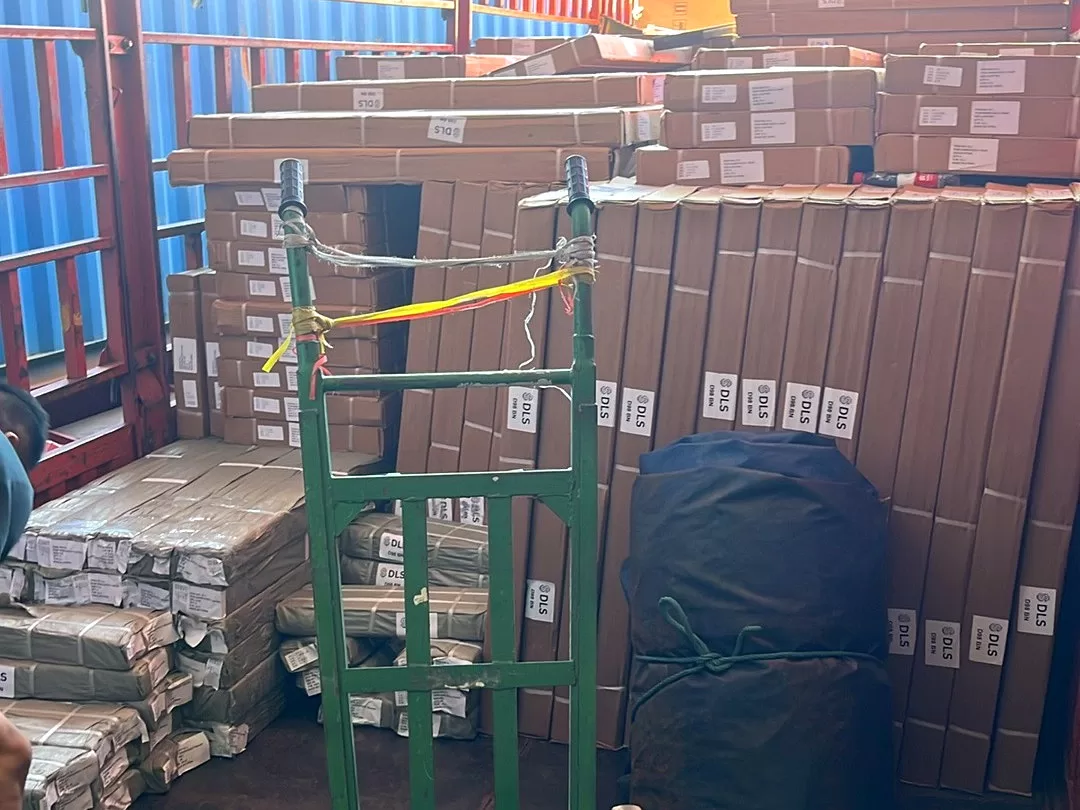
Our own warehouse in Yiwu: the last checkpoint before your goods are loaded and shipped.
Why this matters
Price is easy to quote. A person you can count on is not.
Most imports go wrong in ways that have nothing to do with the price. A specification drifts between what you asked for and what the factory understood. A question sits unanswered for three days while a production slot closes. A defect turns up after the container is sealed, when fixing it costs a shipment instead of a phone call. None of that is a pricing problem — it is a working-with-people problem. So we treat the way we work as part of the product, not as a favour on top of it. The six habits below are the ones that decide whether an order runs quietly or turns into a long month. More about how we are set up →

The first three
From the first enquiry to a raised problem
These are the habits you meet early — in how your questions are answered, how we follow up, and what happens the moment something goes wrong.
We read the question behind the enquiry
Every enquiry gets a reply the same working day, and we repeat your question back before we answer it — “best price” becomes which market, what quantity, what packing and which port. We ask what the goods have to do once they land, because a quote you cannot use is no faster than no quote at all. You get the price with a landed-cost view attached, not a bare number at the factory gate.
Quick to reply, never chasing you
We answer inside the same working day and tell you when the next update is due, so you are never left refreshing an inbox. Follow-ups carry something new — a re-quoted price, a sample photo, a different factory option — rather than the empty “any update?”. If there is genuinely nothing to report yet, we say that, and we say when there will be.
When something goes wrong, the same person stays on it
You have one named contact from brief to port, and that does not change when a problem appears. We set out the situation, the options and the likely timeline early — even before it is fixed — so you are never chasing a phone that has gone quiet or a person who has started pointing at the factory. A defect found in the factory is dealt with in the factory, with the supplier, before the goods move.
The next three
Once the order is placed and the deposit is in
The habits below decide what the order feels like in the middle — when prices move, when specs are questioned, and when a market does not behave the way the catalogue promised.
We promise only what we can hold to
Dates and terms are quoted with the factory’s real capacity in mind, not the number that wins the enquiry. If a supplier cannot keep a date, you hear it as soon as we do, with the alternatives laid out rather than buried. We would rather quote a longer lead time and keep it than promise a short one we cannot deliver on.
We tell you when not to buy
If a product will not carry its cost, or a specification will not survive shipping, we say so and explain why. We recommend against ideas when the numbers do not work, and we put the reasoning in front of you rather than a bare “no”. You are buying a judgement, not a person who types “OK” to everything you propose.
Steady over the long run
We do not treat every enquiry as if it were the last one, and a slow reply from you is read as a busy week, not a rejection. When a market, a price or a supplier shifts, we tell you before it reaches your order. The relationship is the point — a single container is not.
What this means for you
Your order, because of these six habits
- One named contact, from brief to port
- An answer the same working day, with your question quoted back
- Problems raised while they are still cheap to fix
- Dates and terms you can plan a season around
- A straight “no” when a product is not worth importing
Inspection and follow-up run through the same team, so nothing waits on a handover. See what we check before shipping →
Common questions
What buyers ask about working with us
Do I deal with one person or with a whole team?
One named contact leads your order and is who you write to. Behind them the buying desk in Yiwu, the quality team, shipping and documents all work from the same order file, so you never have to work out who owns your question. Start with a brief →
How quickly will I hear back?
Enquiries are answered the same working day. A complex quote — several suppliers, a bespoke specification, a new market — can take a little longer, and in that case you get a note telling you when to expect it, rather than silence.
What happens if the goods are not right when they arrive?
We go back to the supplier with you rather than stepping aside. The point of inspecting before shipping is to catch the problem while it is still correctable in the factory; when something still slips through, we document it and take it up with the supplier on your behalf. How we follow an order →
Can you work with a supplier I already use?
Yes. Some clients keep their own factory and use us only for inspection, consolidation and export documents. The same habits apply whether we sourced the goods or you did.
Tell us what you are buying next
Send the product, the quantity and your destination. You get supplier options, a landed cost and a timeline — free.